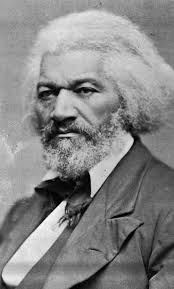
Fredrick Douglass was born in the state of Maryland in the year 1817. He was born into slavery and spent most of his life captive on a plantation. His father, who was believed to be white, may have possibly been the owner of the plantation where he was a slave. His ancestry is very mixed, as he had African, European, and Native American blood. When Douglass was young, his mother became very ill. She eventually died from this illness without Fredrick having seen her before her untimely death. Eventually, in 1835, Fredrick managed to escape slavery and head to the north where he would begin a career as a slave abolitionist.
In his book Narrative of the Life of Fredrick Douglass: An American Slave, he tells the story of his life and how he began a slave but escaped to freedom. Douglass details in this book the brutal, horrible, and soul less act of enslaving another human being. He begins by discussing his the details of his birth. He says:
“I have no accurate knowledge of my age, never having seen any authentic record containing it. By far the larger part of the slaves know as little of their ages as
horses know of theirs, and it is the wish of most masters within my knowledge to keep their slaves thus ignorant. I do not remember to have ever met a slave who could tell of his birthday. They seldom come nearer to it than planting-time, harvest-time, cherry-time, spring-time, or fall-time”
This account details the tragedy that comes with slavery. Slaves were treated so inhumanly that were not even told their own birthday. Douglass illustrates this by comparing the lives of slaves to that of horses. Animals made strictly to work and do exactly as their masters say.
From a literary perspective, the use of first person in this narrative is used seemingly incredibly well. Douglass seems to use the first person point of view to his advantage when taking into account the horrid experiences of slavery. First person point of view is often very effective at bringing the reader into the shoes of the main character, ensuring they will feel the brunt of everything that the character is experiencing. From a writing standpoint, this was a brilliant choice on Douglass’s part.
This remark brings us to a higher level question: how can literature, especially literary devices, be used to inspire change inside of a reader. A theme we often see with literature is the focus on changing the current landscape on things in society, government, religion, and even ourselves. Many times, writers will exercise their voice through the utilization of their craft.
Certain literary devices, such as point of view being in the first person perspective, can be great at depicting suffering, making the reader more susceptible to the feelings of the main character.
Obviously, Fredrick Douglass, being the fantastic writer that he is, used this point of view to help create a sense of pain in what the reader was engaging with. He wanted them to feel exactly how he had felt because that is the only way to truly get someone to act against something as horrendous as slavery. Human empathy is truly an effective way of creating change. The only hard part, is that some people turn away from this feeling because it hurts them to know the truth.
Due to the fact that some people cannot handle the truth of what is going on around them, things proceed to change much more slowly. This is never ideal and probably was the reason why slavery existed for so long.
What other literary devices do you think can be used to depict a narrative in a way that would make someone change their opinion? Is writing with an agenda something that should be avoided or celebrated?
 Michael Tavernier American Lit